

Complete Ayurvedic
Education
Complete Ayurvedic
Education
We have the perfect course for you
Our range of courses together constitute a comprehensive Ayurvedic education. There are many paths to choose from depending on where your interest lies, whether it is for personal growth or practice and how much time you can commit to your chosen route.
Whichever course you choose, the Ayurveda Institute UK remains committed to fulfilling its mission to raise awareness of Ayurveda for the benefit of the whole human community. We do this by making learning and practice as accessible as possible to those who genuinely seek this education, who as a result promise to be its greatest advocates.
Our courses are characterised by authenticity, vocational practice through our clinic, pioneering teaching strategies and technology and flexibility to allow you to mould your education around your life.

Practitioners & Therapists
The two main categories of qualification are as an Ayurvedic Practitioner or an Ayurvedic Therapist. Students can choose any of the courses to learn for their own personal growth and evolution without having to take any exams. In order to offer the most comprehensive practice and development, students can qualify in both categories.
Practitioners offer advice on nutrition, lifestyle, Ayurvedic remedies and medicines and treatments for the treatment of disorders. Therapists provide hands-on therapeutic treatments ranging from Abhyanga Marma Massage to specialised Ayurvedic treatments such as Shirodhara, Panchakarma and many others.
Level 1 Practitioner Course (Ayurvedic Lifestyle & Nutrition) (Dip)
Qualify as an Ayurvedic Lifestyle & Nutrition Consultant.
- Learn Ayurveda from an in-depth and practical perspective and become part of a growing movement in complementary healthcare and allow Ayurveda to guide your personal evolution. Fully accredited course.
- Intensive, vocational course offering more practicum than any other provider of Ayurvedic education to prepare students to practice and treat a wide range of disorders using nutrition and lifestyle advice; prescribing appropriate Ayurvedic herbal supplements; recommending treatment methods and offering home remedies.
Level 2 Practitioner Course (Ayurvedic Practitioner) (Dip)
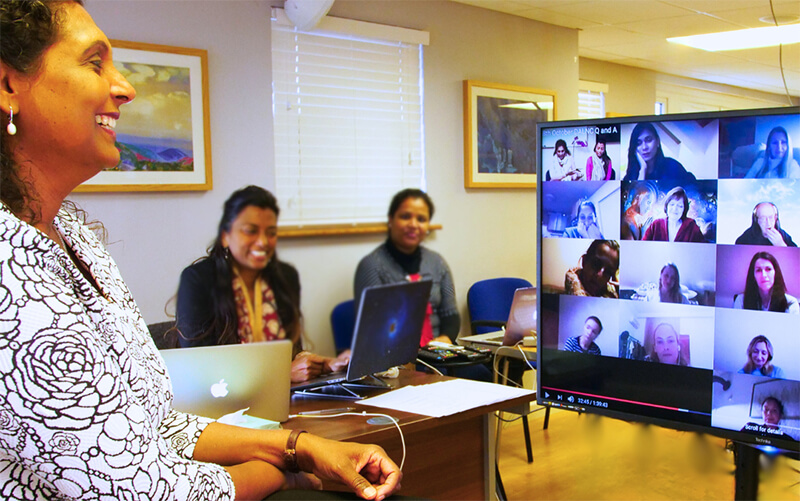
Qualify as an Ayurvedic Practitioner. Taught in 11 immersion weekends, evening classes in Ayurvedic medicine and Sanskrit – in-class and via interactive, live-stream.
- Building upon the knowledge and practice of Ayurvedic medicine from level 1, advance your practice to treat serious disorders and deepen your understanding of herbal medicine.
- Fully accredited course.
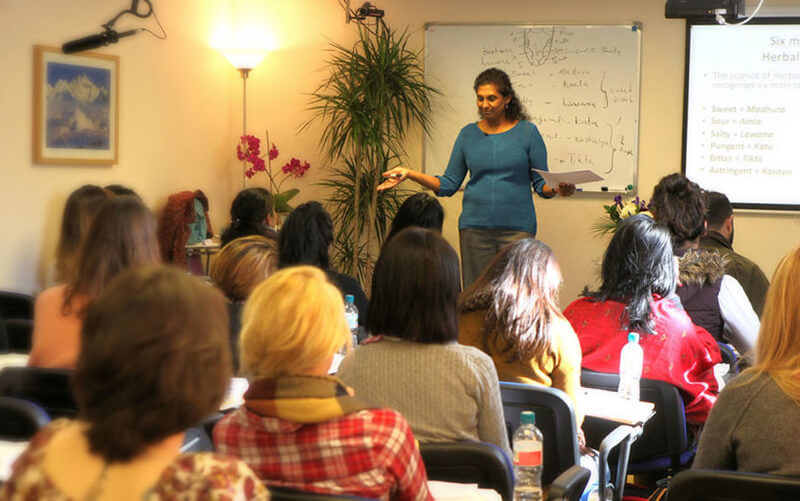
- Intensive, advanced course preparing students to practice at the next level. A phenomenal programme of expert tuition packed into 12 or 18 months for the student who wishes to dedicate themselves to learning Ayurveda at an advanced level. It represents the very best value and very best in vocational training. The course goes straight to the heart of treating disorders using the most effective and practical Ayurvedic methods drawing from the experience of decades of treating serious disorders in the West.
Level 3 International Diploma (Dip)
Intensive diploma course, accredited by the CMA. Comprehensively covers theory and practical training in major traditional Ayurvedic therapies
- Uniquely, the theoretical and practical training is delivered exclusively by Ayurvedic physicians with decades of clinical practice and senior Ayurvedic Therapists who specialise in Panchakarma treatments, all practicing continuously in the well established Ayurvedic Clinic.
- Perfect for those wishing to offer their clients authentic, therapeutic massage and specific focus on treatment of disorders

Level 1 Ayurvedic Massage Therapy (Dip)
Intensive diploma course, accredited by the CMA. Comprehensively covers theory and practical training in major traditional Ayurvedic therapies
- Uniquely, the theoretical and practical training is delivered exclusively by Ayurvedic physicians with decades of clinical practice and senior Ayurvedic Therapists who specialise in Panchakarma treatments, all practicing continuously in the well established Ayurvedic Clinic.
- Perfect for those wishing to offer their clients authentic, therapeutic massage and specific focus on treatment of disorders
Next Massage Therapy Course:
- Dates: 26th October – 1st November 2026
Theory Assessment:
- Dates: 28th November 2026
Application Link: https://wkf.ms/4iqDbV6

Integrative Medicine Course
Valuable, practical information for clinicians to apply to patients and themselves immediately using: nutrition, lifestyle, therapies, mindfulness.
Who is eligible for this course?
- This course is open to all clinicians and therapists, such as Doctors, Pharmacists, Dentists, Nurses, students in any medical field, Therapists, Complementary Practitioners and Nutritionists.

Career Outcomes
Where Can Ayurveda Training Take You?
Ayurveda training can prepare you for work as an Ayurvedic Lifestyle & Nutrition Consultant, Ayurvedic Practitioner or Ayurvedic Massage Therapist. Depending on your chosen course, you can develop knowledge of Ayurvedic diet and lifestyle advice, herbal remedies, approaches to managing health conditions, clinical consultations or therapeutic treatments.
Ayurvedic Lifestyle & Nutrition Consultant – The Level 1 Practitioner Course covers Ayurvedic nutrition, digestion and lifestyle. Graduates receive a Diploma in Ayurvedic Lifestyle & Nutrition, supporting their progression towards work as a consultant.
Ayurvedic Practitioner – The Level 2 Practitioner Course develops knowledge of Ayurvedic medicine, herbal preparations and clinical practice, supporting progression towards professional practice subject to relevant requirements.
Ayurvedic Massage Therapist – The Level 1 Ayurvedic Massage Therapy Course teaches Ayurvedic massage techniques and therapeutic treatments for those interested in working in massage therapy or wellness settings.
Healthcare and Wellness Professionals – The Integrative Medicine Course helps healthcare professionals, yoga teachers and wellness practitioners understand how Ayurvedic principles relate to modern healthcare and their existing work.
Compare Our Ayurveda Courses
Each course has a different focus, from introductory study to practitioner development and practical therapy training. Use the comparison below to understand the main differences and decide which programme best matches your interests.
|
Course |
Integrative Medicine Course |
Level 1 Practitioner Course |
Level 2 Practitioner Course |
Level 1 Ayurvedic Massage Therapy |
|
Main focus |
Ayurveda and modern healthcare |
Ayurvedic lifestyle and nutrition |
Advanced Ayurvedic medicine |
Ayurvedic massage and therapies |
|
Who is it for? |
For students interested in the relationship between Ayurveda and modern healthcare |
For students looking to develop Ayurvedic lifestyle and nutrition knowledge |
For students with foundational Ayurvedic training who want to progress towards practitioner-level education |
For students interested in developing Ayurvedic massage therapy skills |
|
What will you learn? |
Ayurvedic principles and their relevance to modern healthcare |
Doshas, digestion, dietary principles, lifestyle and wellbeing |
Ayurvedic medicine, herbal medicine and the treatment of health conditions |
Ayurvedic massage techniques, therapies and practical applications |
|
Learning approach |
Introductory study of integrative Ayurveda |
Foundational knowledge with practical learning and application |
Advanced study, teaching sessions and clinical training |
Theory, demonstrations and clinical training |
|
Previous study |
Open to beginners and professionals in the health and wellness industry |
Open to beginners and professionals in the health and wellness industry |
Foundational Ayurvedic training is required |
Open to beginners and experienced therapists; no prior knowledge is required |
|
Next step |
Explore the course and enrolment details |
Explore the course and registration details |
Review the prerequisites and register your interest |
Review the course dates and registration details |
Accredited Ayurveda Courses and Professional Recognition
At Ayurveda Institute UK, we are committed to providing quality Ayurveda education guided by experienced practitioners. Our courses are accredited by the Complementary Medical Association (CMA), and have also been recognised by the Association of Ayurvedic Professionals UK (AAPUK). These professional connections support our commitment to maintaining standards in Ayurvedic education and practice.
Complementary Medical Association (CMA)
The CMA promotes professional and ethical standards in complementary medicine. Accreditation recognises that a course meets the association’s requirements for training. When choosing a qualification, check the accreditation status of your specific programme and the requirements that apply to your intended practice.
Association of Ayurvedic Professionals UK (AAPUK)
The AAPUK supports the development of Ayurveda and its professional community in the UK and internationally. Following successful completion of your course, you may be eligible to apply for professional registration, subject to the association’s requirements.
Study Ayurveda Online from Anywhere in the World
Our Ayurveda courses are designed to be completed fully online, allowing you to study alongside your existing commitments. Through live online sessions, recorded lessons and access to course materials, you can learn at your own pace while receiving guidance from experienced practitioners.


Frequently Asked Questions
What is Ayurveda, and how does it approach health and wellbeing?
Ayurveda is an ancient science of health that dates back more than 5,000 years. The word means “science of life”. Ayurveda defines health as physical, mental, spiritual, and social wellbeing, with an emphasis on balance, prevention and daily habits that support wellbeing.
What will I learn when studying Ayurveda?
Course content varies by level and programme. Students may explore Ayurvedic principles, the three doshas, individual constitution, diet, digestion, herbs and lifestyle practices.
Can beginners study Ayurveda in the UK?
Yes. Ayurvedic education in the UK includes programs from short workshops to professional diplomas. Our courses at the Ayurveda Institute can help beginners understand its history, language, and core principles before deciding to deepen their knowledge through further study.
How can I study Ayurveda online in the UK?
At Ayurveda Institute, our courses are designed to be completed fully online, with learning materials, recorded lessons and live sessions that allow students to study from different locations.
What is the difference between Ayurvedic practitioner and therapist training?
Practitioner training focuses on areas such as Ayurvedic nutrition, lifestyle guidance and approaches to health, while therapist training focuses on hands-on treatments and therapeutic techniques. Your choice depends on the knowledge and skills you want to develop and the professional pathway you plan to pursue.
Can an Ayurveda course help me improve my personal wellbeing or career?
Studying Ayurveda can help you understand lifestyle practices that aim to support balance and vitality. Ayurveda focuses on prevention rather than disease treatment, with attention to diet, daily routines and other aspects of wellbeing. Professional training can also support further development in complementary health, depending on your qualification and experience.
How do I choose the right Ayurveda school?
Look at the course syllabus, qualification, teaching methods, accreditation and learning format. Check that the programme covers the topics relevant to your goals and provides access to appropriate student support. Understanding the source of the teaching and the experience of the educators can also help you make an informed choice.
Does Ayurveda use herbs and natural approaches to support health?
Ayurveda uses herbs alongside dietary guidance, daily routines and other practices to support wellbeing. The methods studied depend on the course. Students pursuing professional training should understand the appropriate use of Ayurvedic preparations and the importance of seeking qualified medical advice when needed.