

Integrative Medicine Course
Discover the principles of Integrative Medicine by exploring how Ayurveda can complement conventional healthcare to support prevention, personalised care, and overall wellbeing.
Integrative Medicine Course
Discover the principles of Integrative Medicine by exploring how Ayurveda can complement conventional healthcare to support prevention, personalised care, and overall wellbeing.
Overview
Modern healthcare is facing increasing pressure from rising chronic disease, growing patient demand, workforce shortages, and increasing healthcare costs. Integrative Medicine combines the strengths of conventional medicine with traditional healthcare systems to promote prevention, wellbeing, and patient-centred care.
This introductory course explores the foundations of Ayurveda, one of the world’s oldest medical systems, and examines how Ayurvedic principles can complement modern healthcare in a safe, ethical and evidence-informed manner.
Designed for healthcare professionals and anyone interested in holistic health, the course provides theoretical knowledge that can be applied alongside conventional healthcare, not as a replacement for medical treatment.
This course is suitable for you if you are:
- A practitioner of a different discipline and would like to understand Ayurveda.
- Interested to know more about Ayurveda, and its discipline to apply in day to day life, no matter you are a mother, yoga teacher, health professional or any other who interested in their own health and wellbeing.
- Interested in studying to become an Ayurvedic Practitioner to explore the methodology of teaching.
This course is not certified you to counsel a patient as Ayurvedic Health Counsellor or a practitioner. But you can use the over-the-counter ayurvedic herbal supplements to help gain balance for you, and your community.
If you are interested to gain further knowledge to become an ayurvedic health practitioner, please follow our Practitioner courses.
Level 1 – Diploma In Ayurveda Lifestyle and Nutrition Course
Level 2 – Diploma in Ayurvedic Practitioner’s course
Level 1 – Diploma in Ayurvedic Massage Therapy
Register Now
Why Study with Ayurveda Institute UK?
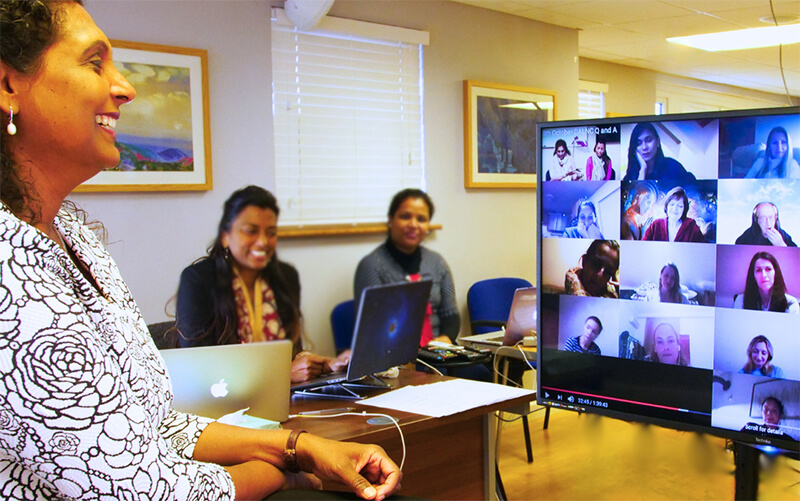
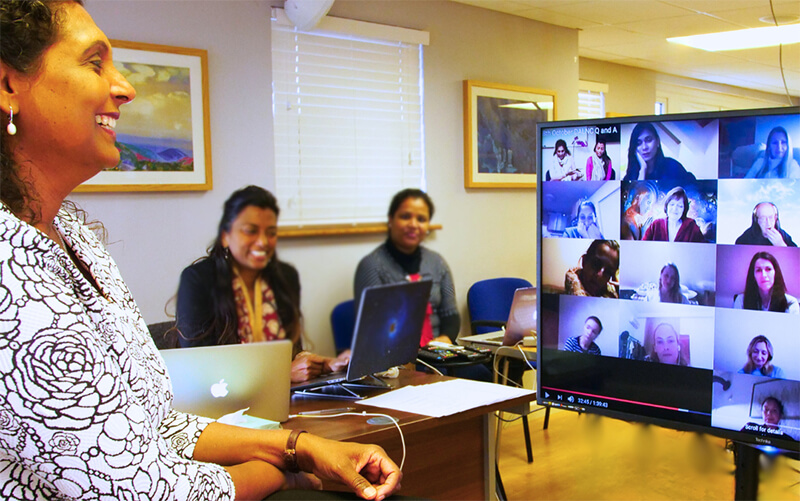
This course provides an introduction to how Ayurvedic principles can complement modern healthcare through a safe, ethical, and evidence-informed approach. Learn from experienced Ayurvedic clinicians and explore the foundations of Ayurveda, including health, prevention, personalised care and lifestyle-based approaches that can support overall wellbeing.
- Learn from experienced Ayurvedic clinicians
- Gain knowledge of Ayurveda through a healthcare-focused curriculum
- Explore Ayurveda through an evidence-informed learning approach
- Suitable for healthcare professionals and beginners
- Understand how Ayurveda can be safely integrated with modern medicine
- Develop foundational knowledge to continue your journey in learning Ayurveda
- Learn from experienced Ayurvedic clinicians
- Gain knowledge of Ayurveda through a healthcare-focused curriculum
- Explore Ayurveda through an evidence-informed learning approach
- Suitable for healthcare professionals and beginners
- Understand how Ayurveda can be safely integrated with modern medicine
- Develop foundational knowledge to continue your journey in learning Ayurveda
To get more information
1. Syllabus, materials & learning support
Lesson 1 : Why the modern healthcare system needs an integration with complementary system of medicine
Explore the importance of integrating Ayurveda and other complementary approaches with modern healthcare to support holistic, preventive, and personalised healthcare solutions.
Lesson 2 : Introduction to Ayurveda as an Eastern approach
Gain an understanding of Ayurveda as an ancient Eastern healthcare system that focuses on balance, prevention, and harmony between the body, mind, and environment.
Lesson 3 : Introduction to health and healthy person in Ayurveda
Learn the Ayurvedic definition of health and the qualities of a healthy individual through the balance of Doshas, Agni, Dhatus, Malas, and mental wellbeing.
Lesson 4 : Introduction to tridosha
Understand the fundamental Ayurvedic principle of Tridosha and how Vata, Pitta, and Kapha govern physiological and psychological functions within the body.
Lesson 5 : Vata dosha
Explore the qualities, functions, and characteristics of Vata Dosha, including factors that influence its balance and imbalance in the body.
Lesson 6 : Pitta dosha
Understand the role of Pitta Dosha in metabolism, transformation, and energy regulation, along with signs of Pitta imbalance.
Lesson 7 : Kapa Dosha
Learn about Kapha Dosha, its role in stability, strength, immunity, and how imbalance can affect physical and emotional health.
Lesson 8 : Importance of Gut health and detoxifying methods (Agni – Ama)
Discover the Ayurvedic understanding of digestion, the importance of Agni (digestive fire), and the formation of Ama (toxins) affecting overall health.
Lesson 9 : Pathogenesis pathway of disorders with toxins (Ama)
Learn how Ayurveda explains the development of disease through the accumulation, movement, and impact of Ama within the body.
Lesson 10 : Relocating the toxins pathways (Dathu, Mala)
Understand how toxins interact with body tissues (Dhatus) and waste products (Malas), contributing to disease progression and imbalance.
Lesson 11 : Psychological wellbeing and spiritual counceling
Explore the Ayurvedic approach to mental health, emotional balance, and the role of spiritual counselling in supporting overall wellbeing.
Lesson 12 : Diagnostic tools (Evalutation of the patient)
Learn about Ayurvedic diagnostic methods used to assess an individual’s constitution, imbalances, lifestyle, and health status.
Lesson 13 : Evaluation of the disease and its process
Understand how Ayurveda evaluates disease progression, stages of imbalance, and the underlying causes affecting health.
Lesson 14 : Treatment system in Ayurveda
Gain an introduction to Ayurvedic treatment principles, including diet, lifestyle modifications, herbal support, and therapeutic approaches.
Lesson 15 : Introduction to Identify the disorders
Learn the Ayurvedic approach to recognising disorders by understanding symptoms, root causes, and individual patient factors.
Lesson 16 : Ayurvedic Management of Hypercholesterolemia, Heart Disorders and Obesity
Explore Ayurvedic perspectives and management approaches for metabolic and cardiovascular conditions through personalised lifestyle, diet, and therapeutic recommendations.
2. Course leaders
- Dr. Deepika Rodrigo (B.A.M.S, MSc HPE)
Dr. Deepika Rodrigo, founder and principal teacher of the Ayurveda Institute UK, also serves as the principal lecturer for our courses. She holds the position of director at both the Ayurveda Institute UK and the Association of Ayurvedic Professionals UK. With nearly 25 years of continuous clinical practice in the West, Dr. Rodrigo is a distinguished leader in promoting Ayurveda across the UK. She holds a BAMS degree and an MSc in Health Professions Education from Hull York Medical School.
3. Eligibility & Certification
The course is suitable for both healthcare professionals and any one interested in Ayurveda.
There is no formal examination.
Participants who complete the course will receive a Certificate of Completion.
Each lesson includes a short self-assessment quiz to reinforce key concepts, check your understanding, and support your learning throughout the course.
4. Fees & registration
Dates and cost
The course runs continuously.
The course is £449.99.
If you wish to study on the Diploma in Ayurveda Lifestyle and Nutrition Course, the Integrative Medicine course fees can be offset against the Diploma fees.
Entry Requirements
There are no entry requirements.
How to apply
Pay below. You will receive your course login details via email.
If you have any further questions please email [email protected]
Meet Your Admissions Team

Ilanka Fernando
Course Director
If you have any inquiries about our offerings or need assistance understanding the course details, please feel free to call me.
Book a Call

Saumya Hewage
Course Cordinator
If you have any questions about how Ayurveda can help you or why you should study with us, please feel free to call me.
Book a Call
Frequently asked questions
Do I need a medical background?
No. The course is suitable for both healthcare professionals and any one interested in Ayurveda.
Is Ayurveda intended to replace conventional medicine?
No. This course explores how Ayurvedic principles may complement conventional healthcare. Conventional medical advice and treatment should always be followed for serious or emergency conditions.
Will I be qualified to practise Ayurveda?
No. This is an introductory educational course and does not qualify participants to practise as an Ayurvedic practitioner.
Book a Call
[gravityform id=”4″ title=”false”]